This book is offered as an explorer ’s source book in the mapping of various psychological problems inherent in the practice of Sri Aurobindo’s integral sadhana. There are possible dangers in working with spiritual and psychological domains simultaneously and the various pitfalls are extensively elaborated in this book, because knowing about them can lessen the dangers.
This book attempts to give a critical commentary on the current events within the Auroville community. It poses questions that require collective answers to understand the underlying causes of the difficulties and obstacles that currently divide the community. What are the citizens' understanding of their ideals in Auroville, and how do they move to achieve their ideals? To what extent is Auroville capable of adapting to the changing needs of its citizens and implementing external changes? Are their ideals still able to influence the larger society?
The author's dissecting attitude aims at a minute and critical examination of Auroville's present complicated situation, by removing various appearances from different ill-considered issues, because behind these appearances, there might be a reality that is much closer to the truth and may offer a better understanding. He presents Auroville's crisis not as a sugar-coated spiritual utopia, knowing that such an attitude might hurt the sentiments of the citizens.
The author is aware that the engagement of some of his views, as expressed in this work, might not be acceptable for government officials and those Aurovilians who support them; in their view, no communication should negatively portray Auroville, and as a consequence, the elaboration of the author's deep-rooted personal questions might not serve the community in the spirit of a meaningful experiment. But does such an attitude of censorship and only " Government Media Policy" transparent reporting contribute much toward a unified experiment among the various opposing, fragmented views of all the citizens?
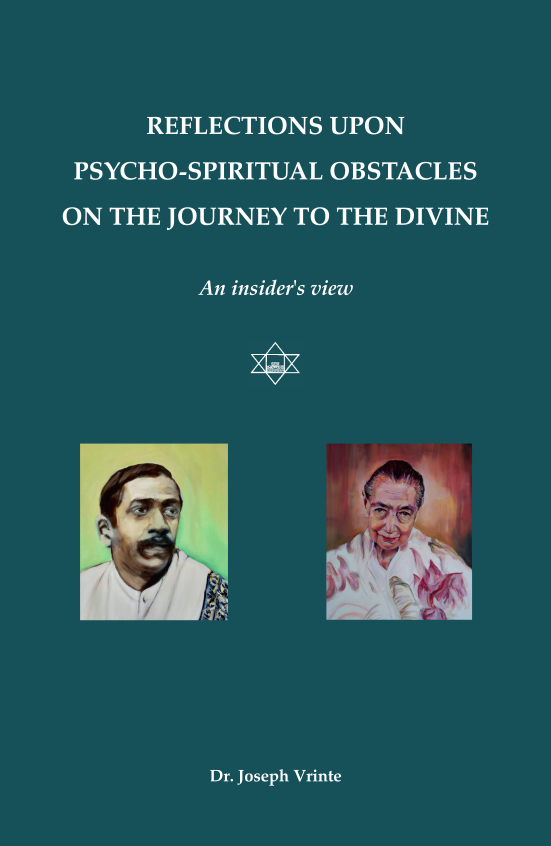
This book is offered as an explorer ’s source book in the mapping of various psychological problems inherent in the practice of Sri Aurobindo’s integral sadhana. There are possible dangers in working with spiritual and psychological domains simultaneously and the various pitfalls are extensively elaborated in this book, because knowing about them can lessen the dangers.
This book is offered as an explorer ’s source book in the mapping of various psychological problems inherent in the practice of Sri Aurobindo’s integral sadhana. There are possible dangers in working with spiritual and psychological domains simultaneously and the various pitfalls are extensively elaborated in this book, because knowing about them can lessen the dangers. Questions and critical notes are not written in a mood of despair or frustration and they are certainly not meant as a criticism against the devotees of Sri Aurobindo and the Mother, on the contrary they are questions that entered the mind of the author during his research-work and long connection with the Ashram and thereafter living in Auroville for the last twenty-two years.
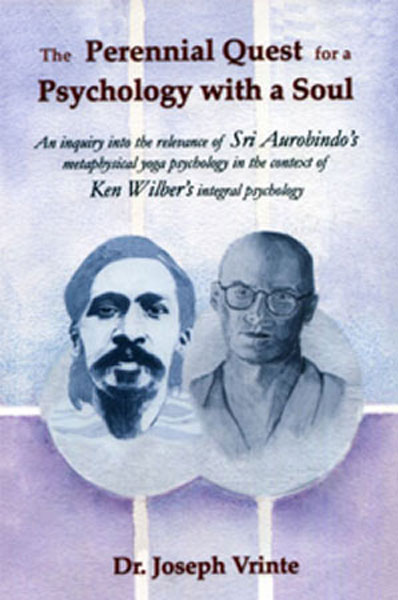
This work aims at creating an impetus for a wider and richer understanding of Sri Aurobindo’s and Ken Wilber’s views, without jumping to general conclusions concerning ‘essential’ differences and ‘ultimate’ identities; it endeavours to maintain the autonomy and multi-dimensional richness of each discipline. The reflections and critical comments aim to analyse and to clarify various discrepancies between them. The author does not assert the superiority of one view over the other and does not want to argue whose thought is the correct one.
This work aims at creating an impetus for a wider and richer understanding of Sri Aurobindo’s and Ken Wilber’s views, without jumping to general conclusions concerning ‘essential’ differences and ‘ultimate’ identities; it endeavours to maintain the autonomy and multi-dimensional richness of each discipline. The reflections and critical comments aim to analyse and to clarify various discrepancies between them. The author does not assert the superiority of one view over the other and does not want to argue whose thought is the correct one. He goes beyond allegiance to any one approach, as each model contributes something of value to the understanding of the complexity of Being. The author has broad sympathy with the aims and intentions of both thinkers, and tries to supplement this sympathy with a critical impartiality.
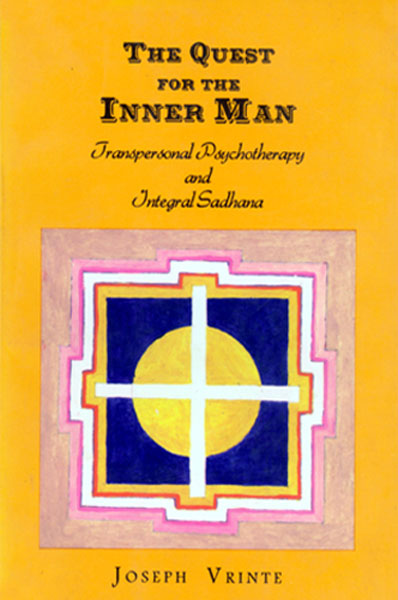
Transpersonal psychotherapy is characterised by the acceptance of the spiritual and cosmic dimensions of the personality, and the possibility of the development of higher states of consciousness. The transpersonal psychotherapist examines the negative influence of psychological conflicts on spiritual development, and the positive influence of spiritual practices on intrapersonal and interpersonal conflicts.
By including spiritual development in the therapeutical level the transpersonal psycho-therapist moves towards the dynamic process of self-transcendence where the individual is seen against his cosmic background.
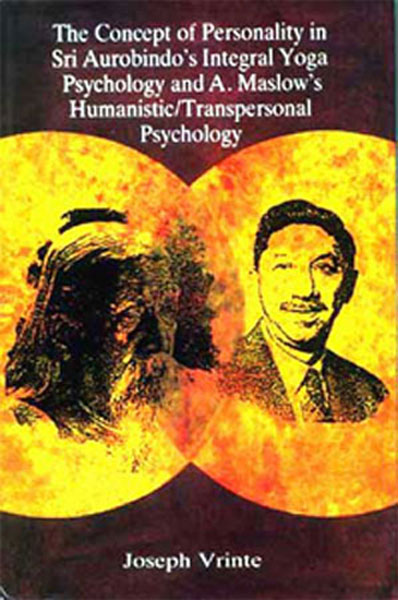
The aim of this work is, in the first place, to make a comparison between the psycho-logical insights underling Sri Aurobindo’s Integral Yoga and the Humanistic and Transpersonal psychologies developed by Abraham Maslow, together with their respective views on the various levels of human consciousness.
The aim of this work is, in the first place, to make a comparison between the psycho-logical insights underling Sri Aurobindo’s Integral Yoga and the Humanistic and Transpersonal psychologies developed by Abraham Maslow, together with their respective views on the various levels of human consciousness; in the second place, the intention is to pinpoint and reveal hitherto unexplored features in the works of both – a very extensive task of which only a little has been done – with reference to the writings of some other authors who have interpreted the psychological aspects of either Sri Aurobindo or Abraham Maslow.